Google Accidentally Leaks Upcoming AluminiumOS Desktop Interface

According to 9to5Google, a bug report (currently inaccessible) about Chrome Incognito tabs leaked the desktop interface for the upcoming AluminiumOS, Google’s merging of ChromeOS and Android.
The build number number showed the text “ALOS” which likely corresponds to the codename AluminiumOS.
DEVICE: Brya(Redrix) CHROME BUILD: 145.0.7587.4(Dev before upgrade) and 146.0.7634.0(Dev after upgrade) ALOS: ZL1A.260119.001.A1
The leak showed footage of the desktop environment which contains elements of Android’s current desktop interface, but with a taller status bar more optimized for larger screens.
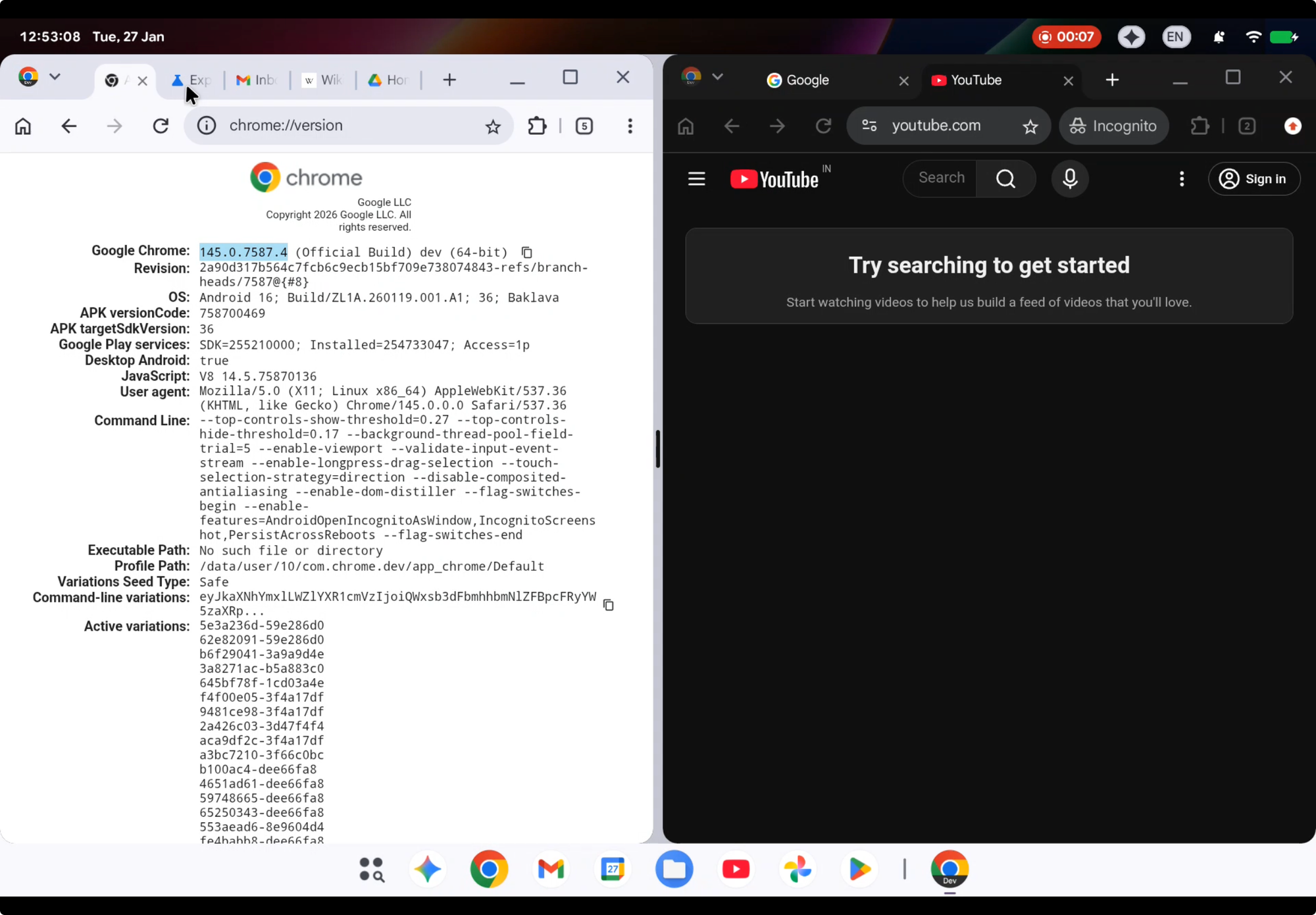
The bottom status bar is identical to the current Android QPR3 beta 2 desktop mode.
The existence of a merging of Android and ChromeOS has been rumored for years before being casually confirmed in an interview with Sameer Samat, president of Android ecosystem development at Google.
Then at the Snapdragon Summit in September, Google teased its work on merging Android and PC:
We’ve embarked on a project to combine that. We are building together a common technical foundation for our products on PCs and desktop computing systems.
In November, a job listing at Google was spotted for “a new Aluminium, Android-based, operating system,” confirming that the name, or codename at least, for the project was Aluminium.
A merging of Google’s desktop and mobile offerings would allow Android users to have a unified experience across both platforms, and allow for running desktop programs on their phone.
Android’s long-awaited desktop mode promised to bring the desktop experience to Android, but it seems that Android users will get desktop hardware as well.
Aluminium OS is expected to contain a lot of AI features, so likely the hardware will need to be a bit beefier (although that’s speculation on my part). That could spell good news for people wanting more performance out of their Chromebooks.
If Google ends up making desktop hardware, it would open the door for GrapheneOS to support it as well. A desktop version of GrapheneOS would provide the most secure desktop OS experience available by far.
Chromebooks have 10 years of support, unheard of in the mobile landscape. If Google brings that level of support to the Android space, that would beat out their own guaranteed 7 years of support for Pixel devices.
The possibilities of what a merged ChromeOS and Android ecosystem could bring are exciting, if the best parts of each are brought over it could be great for the lifespan and convenience of our devices. After all, if you can replace your desktop with your phone, that means less devices to purchase.
Community Discussion